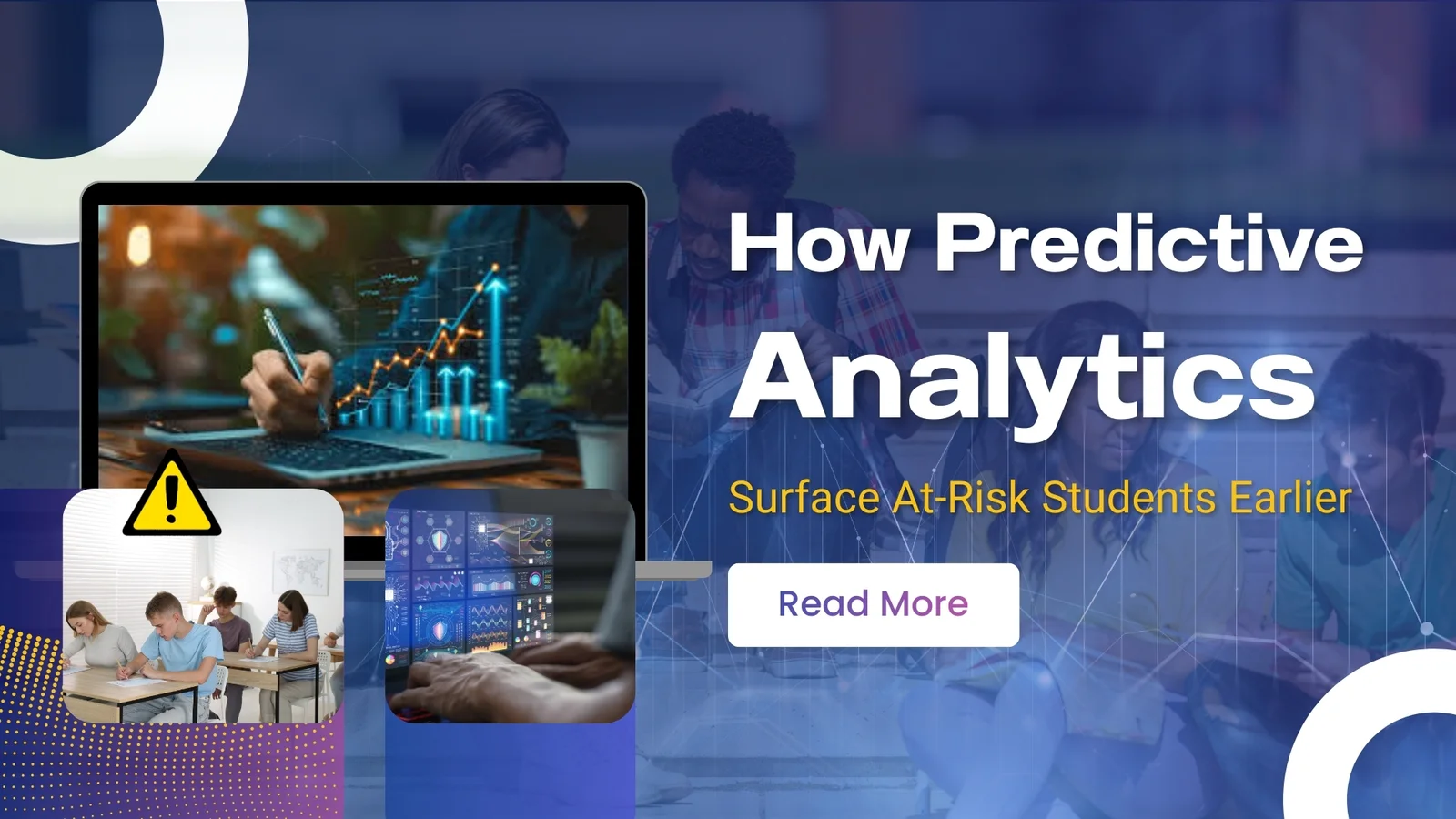
In the modern educational landscape, US school districts are moving beyond historical reporting to embrace a proactive, data-centric philosophy. For district leadership, the primary challenge is no longer a lack of data, but the “data silos” that prevent a unified view of student health. High-performance districts are increasingly turning to predictive analytics to surface at-risk students months before traditional warning signs such as failing grades or chronic absenteeism become irreversible.
By adopting a predictive lens, superintendents and executive boards can transform vast datasets into a safety net, allowing for early intervention strategies that directly impact graduation rates and long-term student success. This shift is more than a technological upgrade; it is a strategic commitment to ensuring no student falls through the cracks.
The Strategic Shift from Hindsight to Foresight
Key Risk Indicators Surfaced by Predictive Models
The following data points are often the first to shift when a student begins to drift off-track. Predictive analytics aggregates these to create a comprehensive risk profile.
| Data Category | Traditional Indicator (Late) | Predictive Signal (Early) |
|---|---|---|
| Academic | Failing Grade at Term End | Missing Grade in Week 3 or 4 |
| Engagement | Chronic Absenteeism (10%+) | Drop in LMS Login Frequency |
| Behavior | Suspension or Expulsion | Increase in Low-Level Referrals |
| Social | Student Withdrawal | Decreased Peer-to-Peer Interaction |
Overcoming Data Silos with Unified Leadership Portals
One of the greatest hurdles for large school districts is the fragmentation of information. Student data is often scattered across Student Information Systems (SIS), Human Resources portals, and separate assessment platforms. Without a unified view, identifying at-risk students is a manual and error-prone process. Modern enterprise solutions solve this by creating a centralized nerve center for district data.
Aligning Predictive Insights with District Strategic Plans
“AI changes the dynamic by analyzing attendance patterns alongside enrollment and historical behavior to surface early risk indicators. District leaders can identify which groups are beginning to disengage and intervene before attendance issues escalate into funding challenges.” — Hexalytics Strategic Review
Measurable Impact: Better Retention and Fiscal Health
The Predictive Lifecycle for District Success
- Ingest: Centralize SIS, LMS, and assessment data.
- Analyze: Apply machine learning to identify students veering off-track.
- Alert: Notify stakeholders.
- Intervene: Deploy resources based on specific risk factors.
- Evaluate: Measure intervention success against the Strategic Plan.
The Final Takeaway
About Strategic Plan 360 Powered by Hexalytics
StrategicPlan360, powered by Hexalytics, is an AI-powered analytics platform built for K–12 district leaders. With over a decade of experience supporting state and district agencies, it transforms complex data into real-time insight for strategic planning and accountability.
Our AI powered dashboards align goals, metrics, and actions across departments, giving superintendents and boards the clarity to lead with confidence. Backed by deep education expertise, we deliver secure, scalable reporting that drives measurable progress.
Take the Next Step Toward Data-Driven Excellence
FAQs
1. What is predictive analytics in K-12 education?
Predictive analytics in K-12 uses AI and machine learning to analyze attendance, grades, behavior, and engagement data to identify at-risk students before performance declines.
2.How do school districts identify at-risk students early?
Districts use predictive models that detect early warning signals such as reduced LMS activity, missed assignments, and subtle attendance shifts instead of waiting for failing grades.
3.What data is used in K-12 predictive analytics dashboards?
Modern K-12 analytics dashboards integrate SIS, LMS, assessment scores, behavioral records, and enrollment data to generate real-time student risk insights.
4.Can predictive analytics help with attendance funding?
Yes. Early detection of disengagement helps districts stabilize attendance rates, which directly impacts state funding tied to Average Daily Attendance.
5.How does predictive analytics improve graduation rates?
By surfacing early risk indicators, districts can intervene months earlier with targeted academic, behavioral, or social support, improving retention and graduation outcomes.