
About This Article
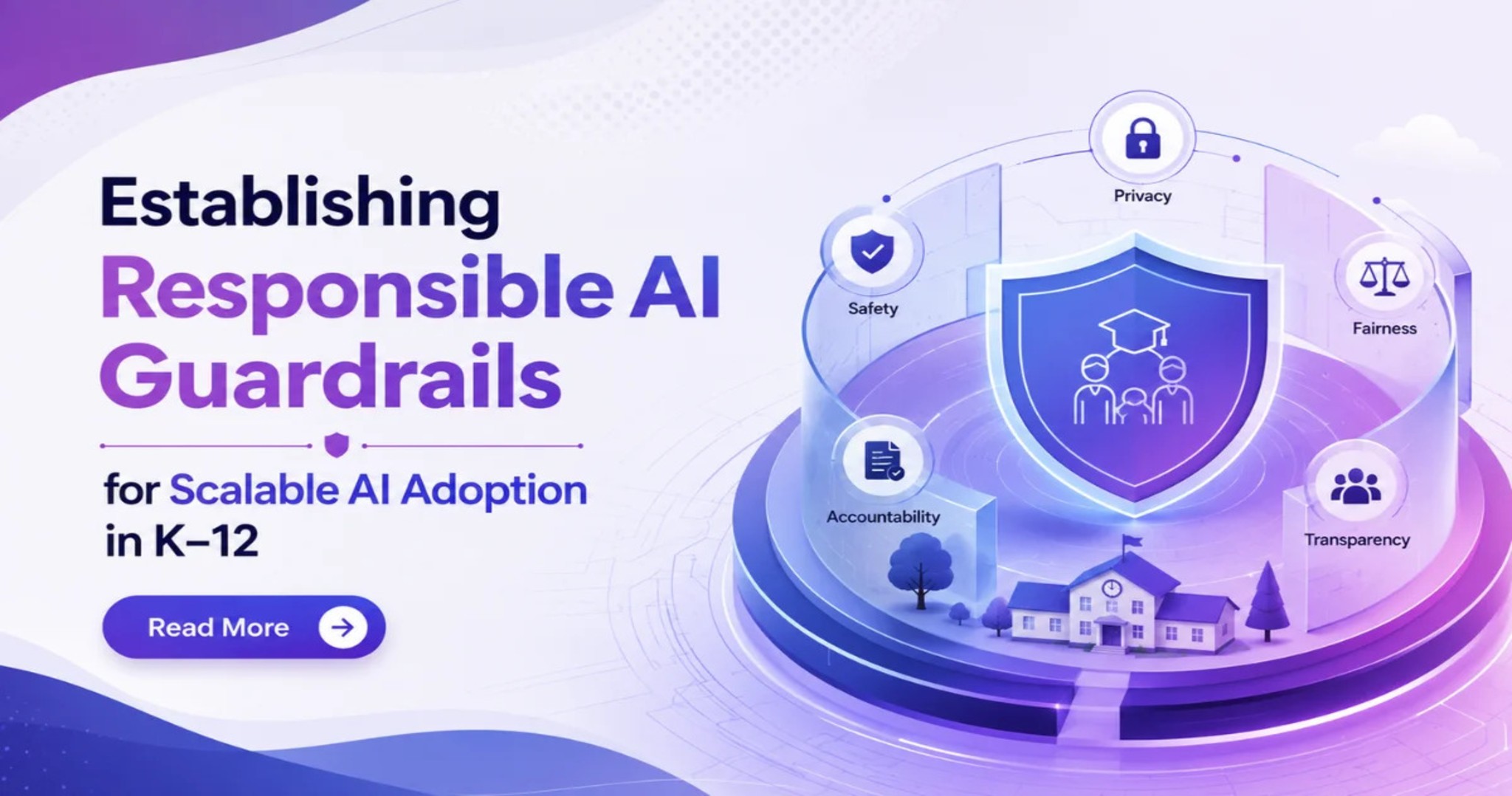
Artificial intelligence is becoming a core part of how K–12 districts plan, operate, and make decisions. As adoption grows, district leaders are placing greater emphasis on responsible AI guardrails that support innovation while protecting privacy, strengthening governance, and maintaining trust across the school community.
Quick Summary
Responsible AI requires more than adopting new technology. It depends on clear governance, secure data practices, and leadership oversight. Learn how scalable AI guardrails help K–12 districts manage AI responsibly while supporting strategic planning, compliance, and long-term district goals.
As we approach the 2026 academic cycle, the K–12 landscape has shifted from a state of “AI curiosity” to a mandate for “AI accountability.”
For the modern CTO and CIO, the conversation has moved beyond the novelty of generative tools and toward the structural necessity of governance.
In this enterprise-level climate, pilot projects are no longer sufficient. District leaders require an institutional framework that balances innovation with safety—a strategic plan that is as dynamic as the technology itself.
This is where StrategicPlan360 bridges the gap, transforming theoretical guardrails into actionable, data-secure district practices.
The 2026 Priority: From AI Shadow to AI Oversight
One of the most significant risks facing school districts today is “Shadow AI”—the unsanctioned use of AI tools by staff or students that bypass district security protocols. Market research indicates that, left unchecked, these tools can expose sensitive student data, violating FERPA and COPPA compliance.
Our data and analytics solutions serve as the enterprise-level command center for this transition. By centralizing disparate data streams—from Student Information Systems (SIS) to HR and Finance—the platform allows CIOs to monitor digital signals across the district.
It’s not just about seeing what is being used but ensuring that usage aligns with the district’s strategic goals.
A Unified Ecosystem of Solutions
1. Executive Dashboards That Drive Strategic Decisions
Instead of waiting for end-of-year reports, data-driven leaders can see Goal Progress indicators that update dynamically, allowing for mid-course corrections that save both time and budget.
2. Strategic Enrollment: Why a Dashboard Is Your Best Consultant
It provides a live view of enrollment shifts by school and grade, helping leaders see multi-year changes early and plan deliberately without recurring consultant costs or last-minute reactions.
3. Asset Fusion 360: Total Lifecycle Visibility
With the expiration of pandemic-era funding (ESSER), districts are facing a funding cliff. Managing resources has never been more critical.
4. Building Trust Through Enrollment and Financial Visibility
The Enrollment Dashboard uses AI-powered forecasting to predict demographic shifts, helping districts plan for staffing and facility needs years in advance.
Implementing Responsible AI Guardrails
As noted in recent market research on EdTech trends, the next leap in education is “Agentic AI”—systems that autonomously resolve routine queries and surface predictive insights.
However, these systems must be anchored by human-centered design. We ensure that AI serves as an accelerator for human decision-making, not a replacement for it.
Key Pillars of the Responsible AI Framework
Data Integrity: Automated validation at the point of entry ensures that your “data lake” doesn’t become a “data swamp.”
Equity-Focused Analytics: Identifying and closing digital access gaps to help ensure every student has the tools needed to succeed.
Interoperability: Open APIs enable seamless integration with existing LMS and SIS platforms, reducing digital friction across the district.
The Path to Practice
Responsible AI requires more than adopting new technology. It requires governance, secure data practices, and a strategic framework that evolves alongside district priorities. Moving from “Pilot to Practice” means establishing clear oversight, protecting sensitive data, and ensuring AI supports informed decision-making rather than replacing it.
When responsible AI becomes part of everyday district operations, leaders are better positioned to align innovation with accountability, compliance, and long-term student success.
Frequently Asked Questions
1. Why are strategic dashboards important for responsible AI adoption?
Strategic dashboards provide leadership teams with a centralized view of district performance, helping them monitor AI initiatives, align technology with strategic goals, and strengthen governance.
2. How can CIOs and CTOs monitor AI usage across a school district?
Integrated dashboard solutions consolidate information from SIS, HR, finance, and operational systems, giving district leaders better oversight of AI adoption while supporting security, accountability, and compliance.
3. How can school districts move from AI pilots to districtwide implementation?
Districts move beyond pilot projects by establishing governance frameworks, aligning AI initiatives with strategic priorities, and monitoring progress through measurable outcomes.
4. What should districts look for when evaluating AI governance solutions?
Districts should look for secure data architecture, interoperability with existing systems, leadership reporting, governance capabilities, and privacy controls that support responsible AI adoption.
5. What are responsible AI guardrails in K–12 education?
Responsible AI guardrails are the policies, governance practices, and technical controls that help ensure AI is implemented securely, ethically, and in alignment with district priorities, privacy requirements, and educational goals.
