
About This Article
Student safety has become one of the most important priorities for K–12 district leadership. As reporting requirements grow more complex and expectations for timely intervention increase, districts are rethinking how they manage Harassment, Intimidation, and Bullying (HIB). This article looks at how digital HIB management is changing the way schools approach compliance and student safety.
Quick Summary
Manual HIB processes can make investigations, compliance, and reporting more difficult to manage across a district. Learn how digital HIB management streamlines investigations, improves documentation, identifies recurring incident patterns, strengthens compliance, and supports earlier interventions that contribute to safer school environments.v
Strengthening Student Safety Through Digital HIB Compliance
Protecting student well-being has become a core leadership priority and a clear regulatory responsibility. For U.S. school districts, managing Harassment, Intimidation, and Bullying (HIB) has evolved into a complex landscape of strict timelines and high-stakes documentation.
In the modern K–12 environment, school leaders face a daunting challenge: maintaining student safety while navigating a labyrinth of state and federal compliance mandates. Traditionally, districts have relied on fragmented, paper-based systems or basic spreadsheets to track HIB incidents.
However, these manual methods often lead to administrative bottlenecks, inconsistent record-keeping, and, most critically, delayed interventions that can compromise student trust. According to data from the National Center for Education Statistics (NCES), approximately 19% of students aged 12–18 report being bullied during the school year.
The High Cost of Manual HIB Management
For an executive-level administrator, the risks of an inefficient HIB process are twofold: legal liability and educational erosion.
When systems are manual:
Compliance timelines are easily missed, leading to potential state audits or litigation.
Data silos prevent leadership from identifying districtwide trends or incident hot spots.
Staff burnout increases as educators spend more time on paperwork than on student support.
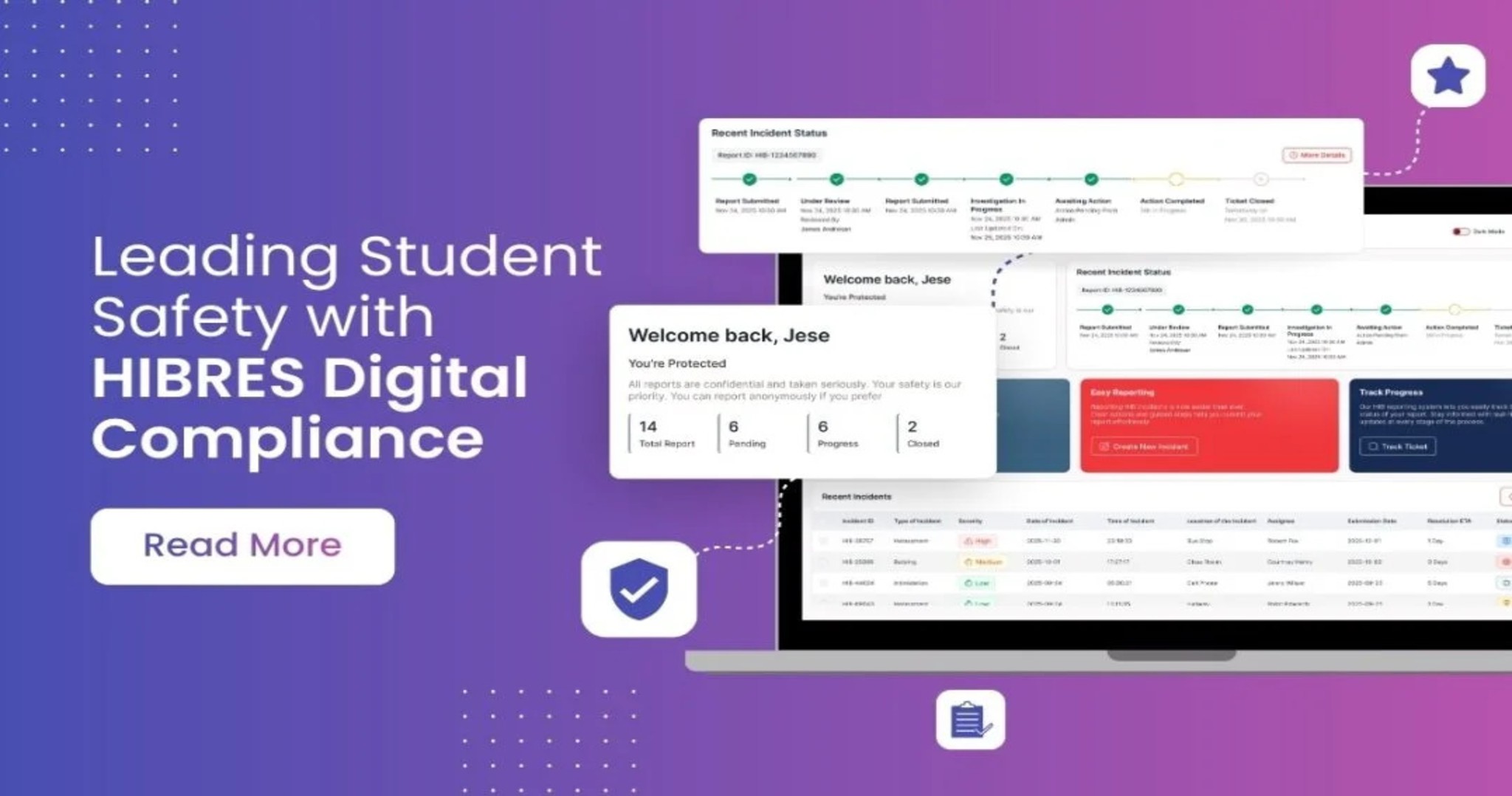
HIBRES: A Connected Platform for Modern Districts
1. Automated Compliance and Legal Precision
HIBRES removes the guesswork from regulatory adherence. The platform features Compliant Workflow Automation, which guides staff through every legal step.
Automated reminders ensure no deadlines are missed, and built-in forms standardize documentation, making the district audit-ready at a moment’s notice.
2. Data-Driven Early Intervention
3. Restoring Trust Through Transparency
HIBRES facilitates real-time alerts and structured communication, ensuring that parents and stakeholders are kept informed within FERPA requirements.
The ROI of Efficiency: Why Districts Are Modernizing HIB Management
The transition to a digital HIB management system yields measurable results for both district operations and the overall school climate.
| Metric | Impact of HIBRES Implementation |
|---|---|
| Investigation Speed | Reduces administrative time by up to 50%. |
| Compliance Accuracy | Real-time alerts virtually eliminate missed filing deadlines. |
| Operational Costs | Significant reduction in paper-related expenses and manual data entry. |
| Student Outcomes | Faster resolution contributes to a stronger school climate and improved attendance. |
Moving Toward a Proactive Future
As we look toward the 2026 academic year, the expectation for school districts is clear: student safety in K–12 schools must be systemic.
HIBRES provides the digital infrastructure necessary to bridge the gap between policy and practice, ensuring that every student has the opportunity to learn in an environment free from intimidation.
By centralizing case management, districts can move from “managing incidents” to “cultivating culture.” It is time to replace administrative overload with a connected platform that works as hard as your educators do.
Frequently Asked Questions
1. How do school districts manage HIB cases?
Many districts still rely on emails, spreadsheets, paper forms, and disconnected reporting processes to manage HIB cases. Digital HIB management platforms help centralize reporting, investigations, documentation, and compliance within a single workflow.
2. What are the risks of manual HIB management?
Manual HIB processes can increase the risk of missed compliance deadlines, inconsistent documentation, limited visibility into recurring incidents, and greater administrative workload for school staff.
3. How can districts identify bullying trends earlier?
Centralized HIB data allows district leaders to identify patterns across schools, locations, grade levels, or time periods. These insights support earlier interventions and more informed student safety planning.
4. Can HIB data support prevention efforts?
Yes. When HIB data is analyzed alongside broader district trends, it can help inform social-emotional learning (SEL) initiatives, staff training, and other proactive student support strategies.
5. What should a digital HIB management system replace?
An effective digital HIB management system should replace paper forms, spreadsheets, email chains, duplicate data entry, and disconnected reporting processes with a centralized, audit-ready workflow.